
"world coffee production"
30000 article(s) found

History and present situation of Coffee production
History of World Coffee production Coffee originated in the tropics of northern and central Africa. It has been cultivated for more than 2000 years, and the Arabs began to plant it in 525 BC. At first, coffee beans were only used for chewing. In 890 AD, Arab merchants brought coffee to Yemen and made it into a drink for the first time. By the 13th century, Arabs had become in the habit of stir-frying coffee, but to
Brazilian boutique coffee Brazilian Santos boutique coffee beans
★ Brazil Santos ★ comes from South America and Brazil is the world's number one coffee producer, accounting for about 30% of the world's total production. Almost all Santos coffee is produced in southeastern Brazil and is the best coffee in Brazil. Raw bean granules can be found from medium to large, but without green, they are neutral coffee. Brazil's "Vicky Gotti Manor" comes from Brazil's top boutique coffee estate "Fazenda\"

The coffee-producing country of Jamaica, one of the countries with low coffee production in the world, introduces
Blue Mountain Coffee can maintain today's top status, but also closely related to the local business policy. In 1932, Jamaica adopted a policy to encourage coffee production to reduce the island's dependence on sugar exports. Unlike most coffee producing countries, the local government does not plant a large number of high-yield and poor-quality coffee in order to increase the output value, but takes the quality as the best, preferring to sacrifice the coffee production.
Where the coffee beans once fell.
Following the five coffee giants Nestl é, Maxwell, Kraft, Newman and Ikham, Starbucks, which calls itself a "real coffee company", recently joined the ranks of coffee buyers in Yunnan, China, where it will establish its first coffee planting base in the world.

Flavor and taste of coffee beans in Vietnam A brief introduction to the cultivation of coffee beans in manor producing areas
Vietnam has a long history of coffee production, but the development and expansion of its production scale began in the last 20 years. After the ups and downs of the world coffee market in 2005 and 2005, Vietnam's coffee industry gained momentum and handed in a satisfactory answer to the world in 2006: Vietnam produced 810000 tons of coffee (13.5 million bags) from 2001 to 2006.

Taste of Brazilian Coffee with soft Flavor introduction to boutique coffee beans in manor production area
General K. Fonseka launched a coup on November 15, 1889, overthrowing the monarchy and establishing the United States of Brazil. Under the slogan of order and progress, and based on the presidential system to strengthen the modernization of Brazil, the new government has achieved good economic results in addition to producing 3/4 of the world's coffee. Later, under the panic of the world economy in the 1930s, the coffee economy suffered a deep pain.
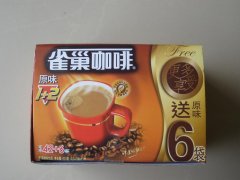
Which brand of instant coffee is good? Ranking of coffee brands in the world
As for the choice of instant coffee, I think everyone has a favorite brand of instant coffee, but which brand of instant coffee is the best? Which kind of instant coffee is the most cost-effective? Let's take a look at the eight best-selling instant coffee brands. Introduction to TOP1 Nestle: Nestle invented the world's first instant coffee Nestle coffee in 1938, and soon became popular all over the world.
Introduction to the Export of Coffee Bean production Market in Ethiopia Coffee production area of Brazil
Professional coffee knowledge exchange more coffee bean information please follow the coffee workshop (Wechat official account cafe_style) Ethiopian coffee market introduces coffee is one of the most popular drinks in the world. It is made from coffee beans of the genus Coffee. It is produced in more than 70 countries around the world, with the largest producers from South America, Asia and Africa. In Africa, the biggest coffee maker

The reason why Brazil is rich in coffee beans high-quality coffee flavor characteristics Brazil coffee bean output first in the world
Some of the most popular coffee in the world originated in South America, and perhaps no country in the region does better than Brazil. Brazil has been the largest participant in the international coffee trade since the 1840s. Today, the country produces 40 to 60 million bags of coffee a year and is the world's largest exporter of instant coffee. The coffee grown in Brazil is mainly Arabica coffee.

Coffee beans are produced in countries where coffee beans are produced.
The most sensible and practical way to understand the countries in which coffee is grown is to classify them into the three major coffee growing regions of the world: Africa, Indonesia and Central and South America. In general, coffee grown in close proximity has similar characteristics. If a particular bean is out of stock, the buyer of a complex product will generally look to a nearby country

Which is the better price of Brazilian Minas coffee, red bourbon or yellow bourbon?
Which is the better price of Brazilian Minas coffee, red bourbon or yellow bourbon? Brazil is the world's largest coffee producer. Brazil accounts for about 1/3 of the world's annual coffee production (by far the world's largest coffee producer and exporter). In 2015, Brazil produced a total of 36.89 million bags of coffee (each bag of 60kg). How many cups of coffee can you imagine? The country's coffee production and

Bonaverde with Ayla Coffee Cloud ecosystem the world's first integrated roasting, grinding and brewing coffee machine
Bonaverde, the maker of the world's first all-in-one roasting, grinding and brewing coffee machine, announced at a product launch during CES2016 that its coffee maker uses Ayla Networks's Internet of things (IoT) technology to connect to the cloud over Wi-Fi. The Bonaverde intelligent coffee maker connected to the Ayla cloud makes coffee by roasting and grinding the world's first coffee.

A brief introduction to the treatment method of grinding degree and baking degree of Brazilian Hilado boutique coffee beans
Brazil is vividly compared to the giant and monarch of the coffee world. There are about 3.97 billion coffee trees there, and small farmers now grow 75% of Brazil's total coffee production. The number of coffee producers in Brazil is twice or even three times that of Colombia, the second largest coffee producer in the world. Unlike in the past, Brazil's economy is now less dependent

Flavor and taste of Brazilian boutique coffee the characteristics of manor producing area introduce the origin of Brazilian coffee
Brazil is the world's largest exporter of coffee, known as the kingdom of coffee. In the past 40 years, the trade volume of Brazilian coffee beans and instant coffee has averaged US $1.38 billion a year. In 2002, the total volume of world coffee trade was 88.7 million bags, and Brazil exported 27.99 million bags, an increase of 19.3% over 2001, accounting for 30% of the world coffee trade volume. (the second is Vietnam, with 12.2 million bags, accounting for 13.7%.
South America Brazil coffee giant Brazil Santos boutique coffee beans
The Brazilian Santos variety comes from South America and Brazil is the world's number one coffee producer, accounting for about 30% of the world's total production. Almost all Santos coffee is produced in southeastern Brazil and is the best coffee in Brazil. Raw bean granules can be found from medium to large, but without green, they are neutral coffee. Brazil's "Vicky Gotti Manor" comes from Brazil's top boutique coffee estate "Fazenda\ Var".
About Coffee World Map
COFFEE WORLD MAP Most coffee production areas are located between the Tropic of Cancer, that is, 25 degrees north of the equator and 30 degrees south of the equator in the tropics or subtropics. Areas with an annual average temperature of 16-25 degrees Celsius, frost-free and rainfall of 1600-2000 mm. At present, there are more than 70 major coffee producing countries, and the Greater China is located at an altitude of 300-400 meters.
An introduction to the main place of Coffee production-- Mexico's Coffee Mercy, the fourth largest coffee producer in the world
Coffee from the world's fourth largest coffee producer, slippery and fragrant, Mexico, the fourth largest coffee producer in the world, produces about 5 million bags of coffee a year. Most of its coffee is produced by nearly 100000 small farmers, and large estates that once manipulated the coffee industry are rare. The yield of Mexican coffee is about 630 kg per hectare. Later, the Mexican Coffee Association (Instituto Mexicano)

A brief introduction to the treatment method of grinding degree and baking degree of Brazilian Hilado boutique coffee beans with strong flavor
Unlike in the past, Brazil's economy is now less dependent on coffee, which accounts for only 8% of GDP. Before World War II, Brazil accounted for 50% or more of the world's coffee production, and now it is close to 30%. But the country's impact on the world coffee, especially on coffee prices, is very important. for example, two frost disasters in 1994 caused global coffee prices.

Brazilian coffee flavor with low sour taste introduction to boutique coffee beans in manor production area
After the establishment of the Brazilian Empire during the Imperial period (1822-1889), the system of the Braganca dynasty and the Portuguese aristocratic forces remained intact, the great manor system and slavery still existed, and Brazil was dependent on Britain economically and politically. Pedro I exercised autocratic rule, forcibly dissolved parliament in 1823, and then used force to suppress Republican uprisings in northeastern provinces such as Pernambuco. 1889
The inheritance of coffee
The world's first bag of coffee beans slowly left the African continent in the 6th century AD and developed for thousands of years. In 1530, the first coffee shop appeared in Damascus, north of the Ottoman Turkish Empire, and the word coffee appeared in British newspapers in 1601. For more than a thousand years, coffee trees have blossomed everywhere in the most livable land in the world, and finally formed major producing areas. At present